2026-09-28 · Allison Brooks
Choosing the Right Underlayment for Louisville Slab Foundations
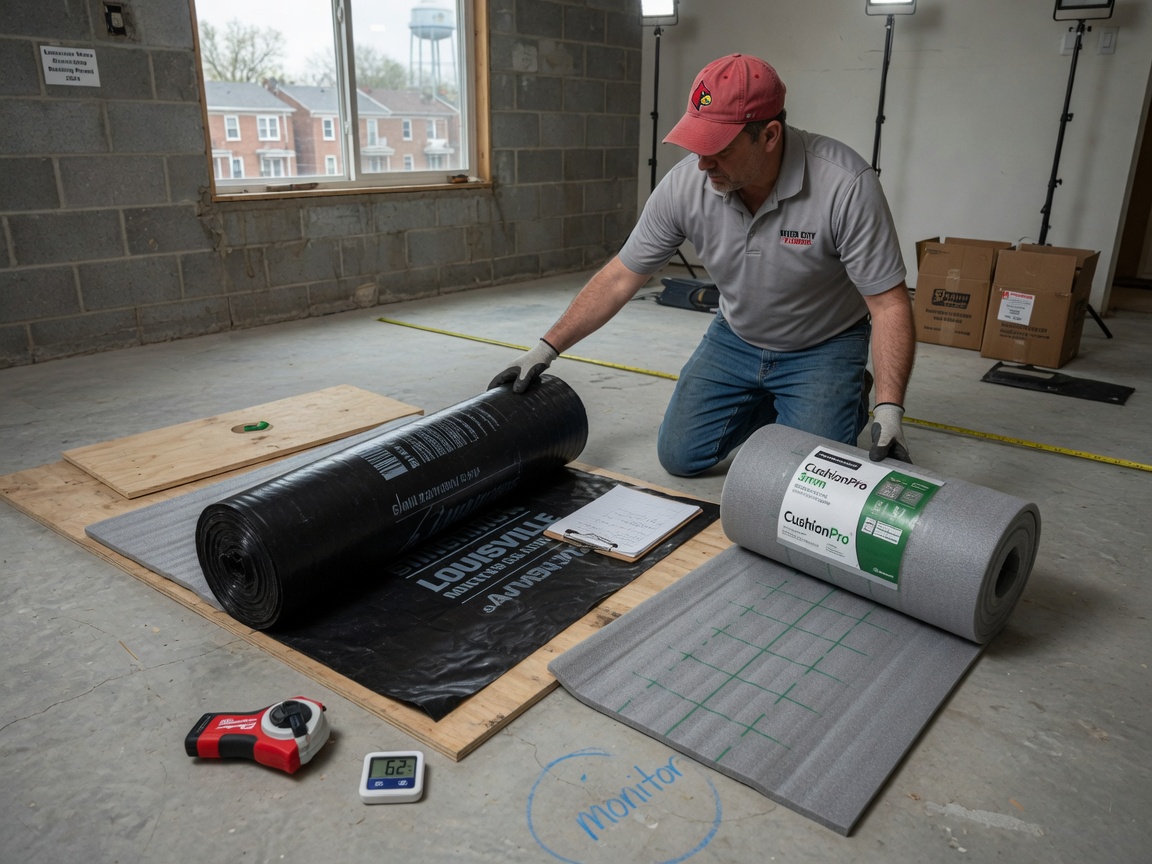
In Louisville homes on slab foundations, a 6-mil polyethylene vapor barrier paired with a 1/4-inch cork or foam underlayment provides the most reliable moisture control for hardwood flooring installation and vinyl flooring installation. This combination addresses the high humidity and occasional groundwater pressure common in Jefferson County slabs.
Slab Foundations in Jefferson County Neighborhoods
Many homes in Old Louisville, Germantown, Butchertown, and Clifton sit on concrete slabs poured directly on grade. These older structures often lack perimeter drainage upgrades, allowing soil moisture to migrate upward during mild winters and hot summers. In contrast, newer builds in St. Matthews and Crescent Hill may include better grading yet still face condensation issues when indoor temperatures drop. The Falls of the Ohio and Louisville Waterfront Park areas show how proximity to water influences slab performance, with higher vapor transmission rates measured in these zones. Underlayment must therefore block both liquid water and vapor without trapping residual moisture beneath the flooring.
Climate Effects on Underlayment Performance
Louisville's humid subtropical climate brings summer dew points often above 70 degrees and winter lows that rarely stay below freezing for long. This pattern drives repeated moisture cycles through slabs, especially after heavy rains near Cave Hill Cemetery or Portland. A vapor barrier alone can suffice in drier Lexington homes, but Jefferson County installs benefit from adding a breathable cork layer that allows minor drying while cushioning the floor. Without this, cupping appears in hardwood within two to three seasons and adhesive failure shows in vinyl within five years.
Recommended Underlayment Materials for Slabs
Select products rated for direct slab contact with perm ratings below 0.1. Polyethylene sheets sealed at seams with tape work well under both Hardwood Flooring Installation and Vinyl Flooring Installation. Cork sheets 1/4-inch thick add acoustic benefits valued in multi-unit buildings in The Highlands and Shawnee. Avoid thin foam rolls under 2 pounds per cubic foot density, as they compress and lose moisture protection within 8–12 years. In flood-prone sections near the Ohio River, combine the vapor barrier with a dimpled drainage mat before the underlayment layer.
Installation Sequence on Louisville Slabs
Begin by cleaning the slab of construction residue and testing for moisture with a calcium chloride kit. Lay the polyethylene sheets with 6-inch overlaps and tape all joints. Roll out the cork or foam perpendicular to the future flooring direction, butting edges tightly. Acclimate materials for 48 hours inside the space before final placement. This sequence prevents telegraphing of slab imperfections through the finished floor and reduces callbacks common in rushed jobs around Downtown Louisville.
When to Add Extra Protection Layers
Radiator heat in older Germantown homes and variable conditions near Elizabethtown call for an extra 1/8-inch rubber mat beneath the primary underlayment. In areas with known past water intrusion, such as sections of Shawnee, consult the details in Hardwood Flooring Installation and Louisville Flood Zones. These additions add roughly $0.80–$1.20 per square foot yet extend flooring life by 10–15 years. Always verify slab flatness to 3/16 inch over 10 feet before proceeding.
Allison’s Flooring Installation operates from 10476 Bluegrass Pkwy, Louisville, KY 40299 with hours Mon–Fri 9am–6pm and Sat 10am–4pm. Proper underlayment selection on Jefferson County slabs protects your investment against local moisture realities and supports long-term performance of hardwood and vinyl floors.