2026-09-28 · Allison Brooks
Managing Humidity for Hardwood Flooring Installation in Louisville Summers
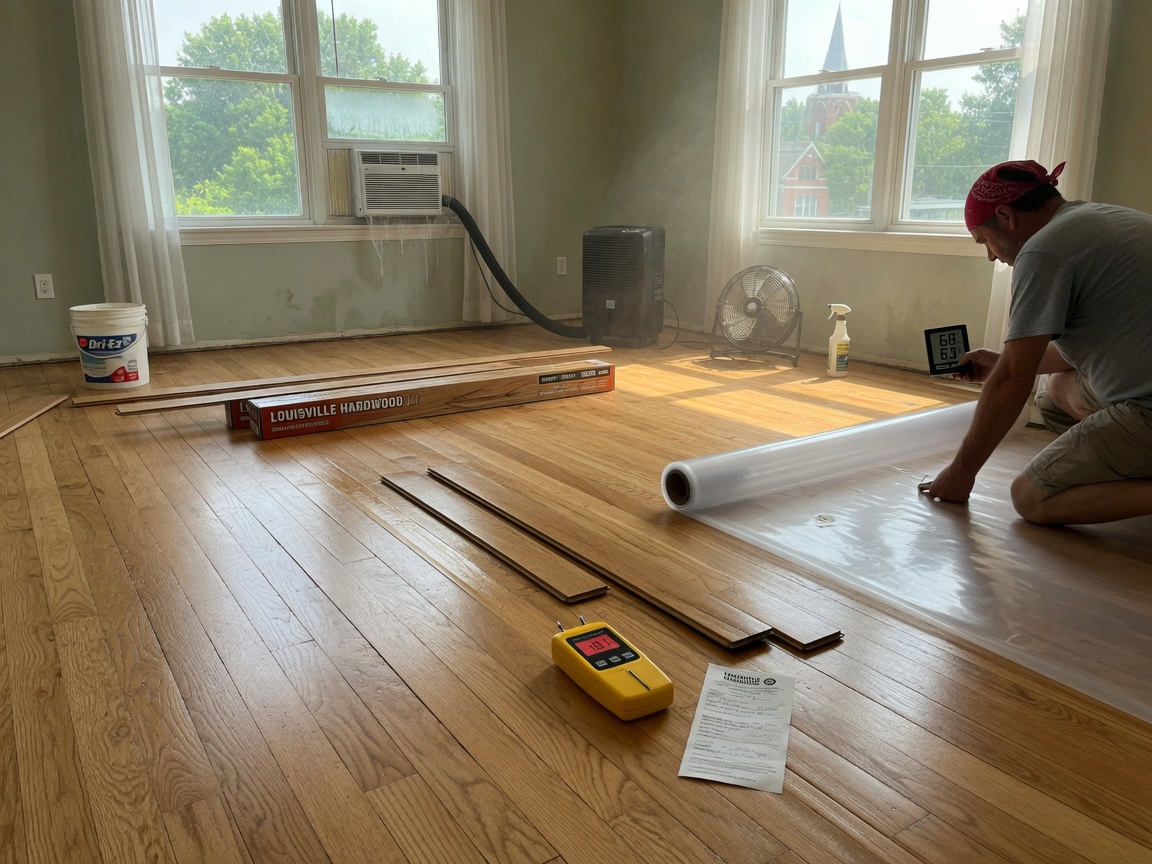
In Louisville summers, hold indoor relative humidity between 40-60% throughout hardwood flooring installation to limit expansion and cupping in solid boards. This range accounts for the region's hot, humid conditions that push moisture content in wood above safe thresholds when unchecked.
Monitoring Humidity Levels During Installation
Louisville experiences frequent summer humidity spikes that affect wood movement in Jefferson County homes built on slabs or with crawl spaces. Use a digital hygrometer to check levels daily in the installation zone, targeting 40-60% before and during the process. In neighborhoods such as St. Matthews and Crescent Hill, older homes often retain more ambient moisture from limited ventilation. Record readings morning and afternoon, then adjust with dehumidifiers if readings climb above 65%. This practice reduces the risk of boards absorbing excess moisture from the air and expanding after placement. Consistent monitoring also helps identify when exterior conditions, like those near the Falls of the Ohio, influence indoor readings through open windows or doors.
Preparing the Subfloor in Jefferson County Homes
Subfloor preparation becomes critical when summer humidity rises because concrete slabs in many Louisville properties hold residual moisture. Test slab moisture with a calcium chloride kit and keep readings under 3 pounds per 1,000 square feet before proceeding. In areas like Butchertown and Portland, older structures may have uneven subfloors that trap humidity pockets. Level these surfaces and apply a moisture barrier rated for high-humidity environments. Homeowners in Clifton often encounter wood subfloors over joists that require additional ventilation checks. Addressing these conditions early prevents later buckling once the hardwood is installed and the space returns to normal summer humidity cycles.
Acclimation Process for Hardwood in Hot Summers
Allow hardwood to acclimate on site for 7-14 days in the same humidity conditions it will experience after installation. Stack boards in the room with spacers between layers and keep the space at 40-60% relative humidity. This step matters in Louisville because rapid temperature swings from air conditioning can otherwise cause uneven moisture absorption. Properties near Cave Hill Cemetery or the Louisville Waterfront Park frequently see higher outdoor humidity that infiltrates during delivery. Check board moisture content with a meter at the start and end of acclimation; aim for equilibrium within 2% of the expected in-service level. Skipping or shortening this period increases the chance of gaps forming once cooler fall weather arrives.
Common Issues in Neighborhoods like The Highlands and Germantown
The Highlands and Germantown contain many early-20th-century homes where summer humidity amplifies movement in newly installed hardwood. Cupping often appears first along exterior walls exposed to afternoon sun. In Germantown, narrow lots and shared walls limit airflow, making dehumidifier placement essential during the first 48 hours after installation. The Highlands properties with original plaster walls can retain hidden moisture that migrates into flooring. Installing in these settings requires extra attention to perimeter expansion gaps of at least 1/2 inch. Addressing these local realities upfront avoids callbacks when humidity drops later in the season.
Post-Installation Care Through the Season
Maintain 40-60% humidity for at least 30 days after installation to let the floor stabilize. Run dehumidifiers during peak afternoon heat and avoid opening windows when outdoor levels exceed indoor targets. Homeowners in Shawnee and Old Louisville benefit from checking HVAC filters weekly because clogged systems allow humidity to build. If minor cupping develops, it often flattens once conditions stabilize. For readers considering complementary options, review Vinyl Flooring Installation as a lower-moisture alternative in high-humidity zones. Further guidance on slab preparation appears in Choosing the Right Underlayment for Louisville Slab Foundations. Contrast these steps with winter practices detailed in Acclimating Hardwood Before Installation During Louisville Winters.