2026-09-28 · Allison Brooks
Hardwood Flooring Installation in Louisville Older Homes
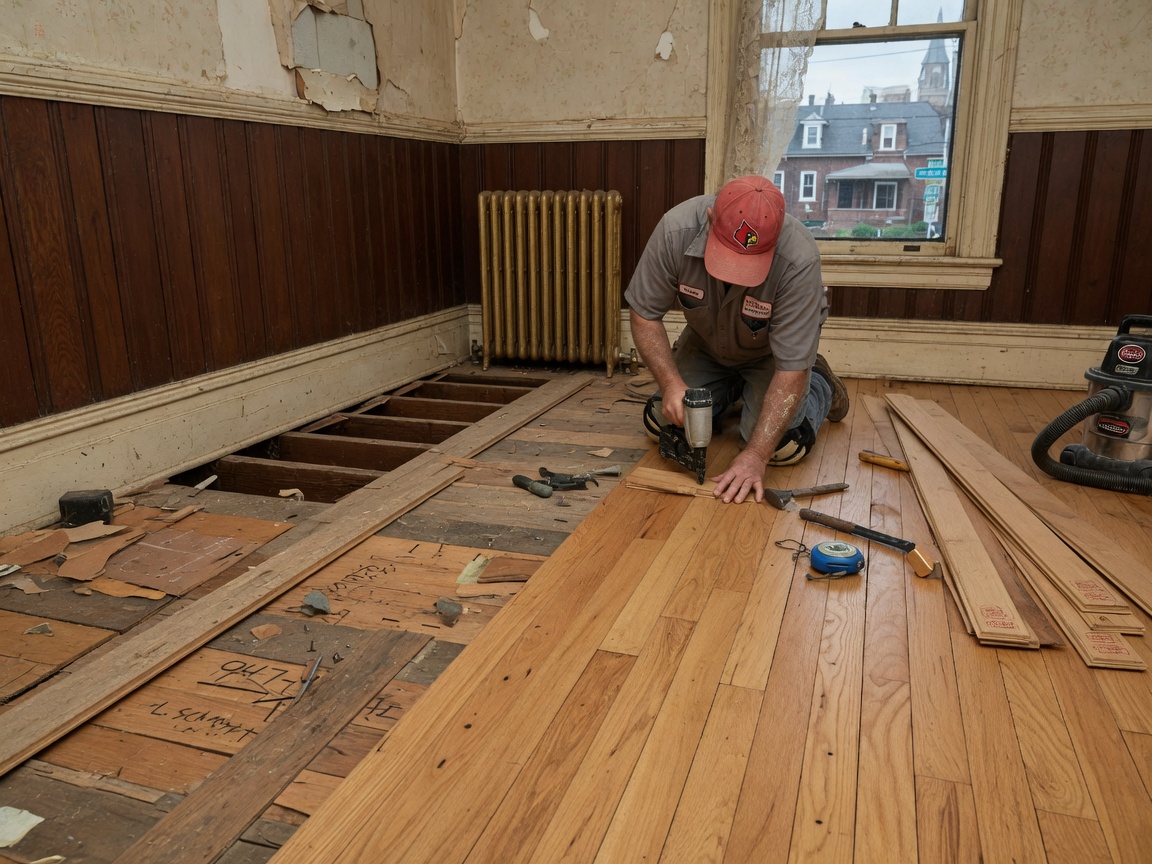
Hardwood flooring installation in Louisville older homes typically begins with 2 to 4 days of subfloor leveling to correct slopes from decades of settling in Jefferson County structures built before 1950.
Assessing Subfloors in Pre-War Homes
Homes in Old Louisville and Germantown often rest on original joists that have shifted over time, creating dips that must be shimmed or sistered before new hardwood goes in. A laser level check across 10-foot spans reveals variations up to 3/8 inch that would telegraph through solid oak or maple. In The Highlands and Clifton, many 1920s bungalows have layers of old linoleum or particleboard that need complete removal to reach a stable base. Skipping this step leads to squeaks within two years. Crews working near Cave Hill Cemetery note that soil moisture from the nearby Ohio River basin keeps crawl spaces damper than newer subdivisions, so vapor barriers get added during every repair.
Acclimating Materials to Local Conditions
Louisville's humid subtropical climate brings summer humidity spikes that demand 7 to 10 days of acclimation for solid hardwood before installation. Storing bundles inside the home at 60 to 80 degrees lets the wood adjust to the exact moisture content it will face year-round. In Butchertown and Portland row houses, thick brick walls hold heat longer, so installers run fans to equalize conditions across rooms. Failure to acclimate properly shows up as gaps the following winter when mild temperatures drop and indoor heat runs. The same process applies in Shawnee and Crescent Hill where single-story ranches have more even airflow but still require the full waiting period.
Installation Steps for Historic Floor Plans
After leveling, installers start at the longest straight wall and work toward doorways, racking boards to avoid clustering short pieces. In narrow Old Louisville hallways, planks are cut to follow original 45-degree angles rather than forcing straight runs. Glue-down methods work best over concrete slabs common in 1940s additions around St. Matthews, while nail-down remains standard on wood subfloors in Downtown lofts. Expansion gaps of 1/2 inch along walls allow for the mild winter contraction that occurs even in Jefferson County. Hardwood Flooring Installation crews document each room's starting moisture reading so homeowners can see the data behind the layout decisions.
Humidity Management Year-Round
Summer humidity in Louisville forces extra attention to acclimation and finishing schedules. Managing Humidity for Hardwood Flooring Installation in Louisville Summers explains how dehumidifiers run during the 48 hours after sanding to keep levels between 40 and 50 percent. Winter jobs in The Highlands move faster because indoor heating dries the air, yet installers still monitor for static that can affect finish adhesion. Homes near the Falls of the Ohio see slightly higher baseline moisture from the river, so a second moisture meter reading is taken at the center of each room before final sanding.
Budget Factors Specific to Older Structures
Cost Factors for Hardwood Flooring Installation in Louisville outlines how subfloor repairs in 1920s homes add $1.50 to $3 per square foot beyond basic material and labor. Refinishing existing original floors in Crescent Hill often costs less than full replacement when the wood remains sound. Homeowners in Shawnee and Portland frequently combine hardwood installation with vinyl flooring installation in kitchens and baths to handle moisture zones. Final numbers depend on species chosen and whether the project spans multiple stories in the taller Germantown townhouses.