2026-09-28 · Allison Brooks
Cost Factors for Hardwood Flooring Installation in Louisville
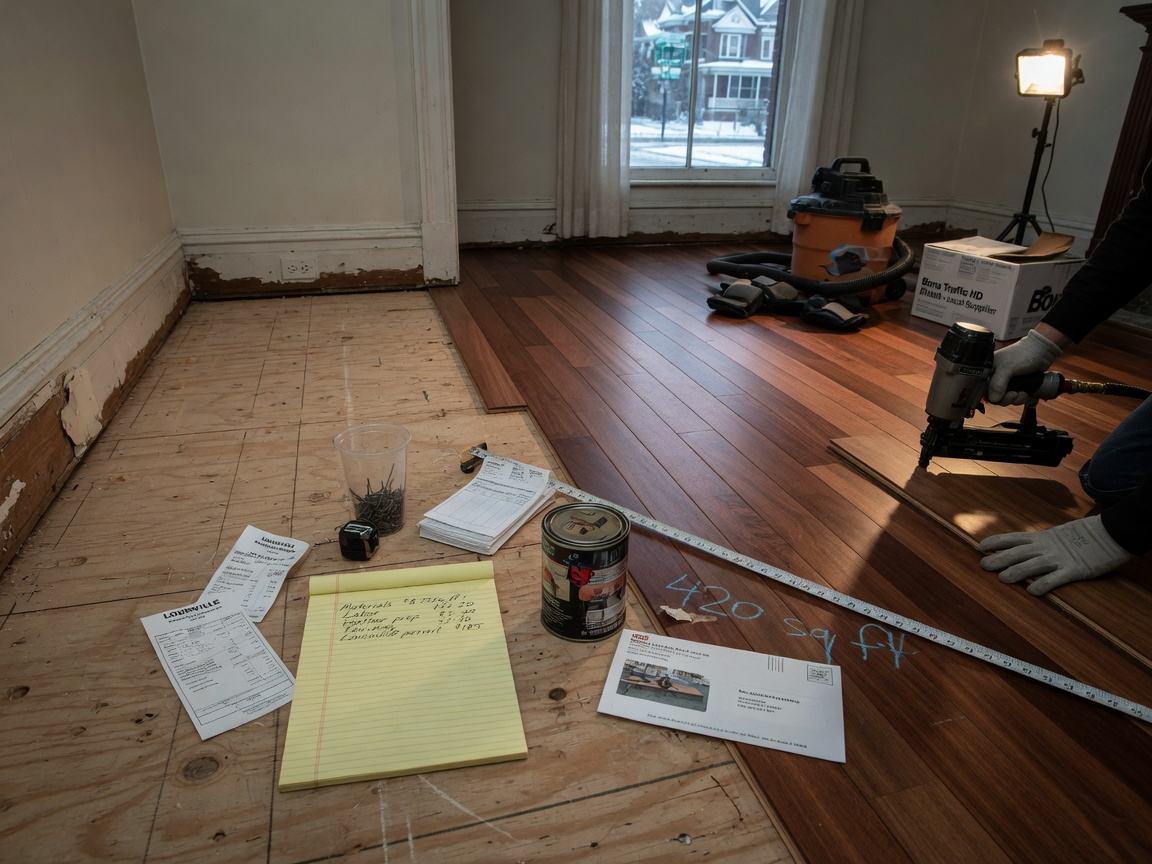
Hardwood flooring installation in Louisville typically runs $8 to $15 per square foot installed, with the final price driven by wood species, site prep needs in older homes, and adjustments for the region's humid subtropical climate. Factors such as neighborhood housing stock in places like The Highlands or Old Louisville often add variables that crews encounter daily when working on 80- to 120-year-old structures. Local conditions in Jefferson County, including mild winters that still bring occasional freezes and hot summers with high moisture, influence acclimation times and adhesive choices. Readers planning projects near landmarks like Churchill Downs or in areas such as St. Matthews should account for these realities rather than generic national averages.
Wood Species and Grade Selection
Species choice directly affects both upfront cost and long-term performance in Louisville's climate. Red oak remains the most common selection because it handles the area's temperature swings without excessive movement, yet white oak or hickory can add $2 to $4 per square foot when clients want better moisture resistance. Lower grades with more knots or shorter boards reduce material expense but require extra labor during layout to maintain visual consistency across larger rooms. In neighborhoods like Germantown and Butchertown, where many homes feature narrow hallways and angled rooms, higher-grade straight runs often prove more economical despite the higher per-foot price. Homeowners comparing options should also review hardwood flooring installation details for current species availability that suits Jefferson County conditions.
Subfloor and Site Preparation Realities
Many Louisville homes built before 1950 sit on pier-and-beam foundations that demand extra leveling before hardwood can be installed. Crews frequently encounter uneven joists in Old Louisville and Portland properties, requiring sistering or shimming that adds $1.50 to $3 per square foot. Moisture testing becomes critical because the humid subtropical summers push relative humidity above 70 percent for weeks at a time, and unaddressed crawl-space vapor can cause cupping later. In Clifton and Crescent Hill, where additions are common, transitions between original hardwood and newer concrete slabs create extra prep steps. These site-specific issues explain why quotes vary widely even within the same zip code.
Climate and Seasonal Installation Adjustments
Louisville's hot summers and mild winters force installers to schedule work around humidity levels rather than calendar dates. Acclimating solid hardwood for 7 to 14 days inside the home is standard practice, yet during peak summer months crews may extend that window or switch to engineered products. The article managing humidity for hardwood flooring installation in Louisville summers outlines how dehumidifiers and moisture meters prevent callbacks in Jefferson County homes. Winter installs near the Falls of the Ohio benefit from stable indoor heating, but rapid temperature drops can still affect adhesive cure times. Properties close to the Ohio River or in known flood zones require additional underlayment considerations detailed in hardwood flooring installation and Louisville flood zones.
Labor Rates and Project Scope Variables
Labor accounts for 40 to 60 percent of total cost in Louisville because most jobs involve custom cuts around fireplaces, radiators, or built-in cabinetry common in The Highlands and Shawnee. Removal of existing vinyl or carpet adds $1 to $2 per square foot when the underlayment is glued rather than floated. Larger open plans in newer St. Matthews homes allow faster installation and lower per-foot labor, while multi-story work in Downtown or Butchertown increases time for material handling. Quotes from Allison’s Flooring Installation at 10476 Bluegrass Pkwy typically itemize these variables so homeowners in nearby Elizabethtown or Lexington can compare apples to apples. For moisture-prone areas, vinyl flooring installation sometimes serves as a lower-maintenance alternative that avoids many of the acclimation steps required for solid hardwood.